Art Deco Interior Ideas
Art Deco interior design has everything to do with glamour, luxury and sophistication. This developed in the 1920s and 1930s, and enjoyed the idealism and glamour of a new modern era. This style integrates audacious geometry, sumptuous materials and excessive decorations. Art deco transforms glimmering metallics to sleek lines, which leaves interiors full of confidence and timeless styles and every space a work of art.
Art Deco home decor is beautiful because it balances extravagance and modernity. It embraces crisp forms, contrasting patterns, and high-quality finishes. Unlike minimalism, Art Deco glorifies detail mirrors, lacquered furniture, and golden accents are its signature elements. This design transforms ordinary rooms into luxurious spaces that showcase creativity, craftsmanship, and sophistication.
The Origins and Influence of Art Deco
Art Deco was born in the roaring twenties, the period of technological advancement and the cultural bloom. It was a departure from traditional styles that welcomed the industrial innovation but still was graceful. Modernism, cubism, and the elements of ancient Egypt and Greece inspired it and turned out to be the artifact of luxury, speed, and sophistication in the whole of architecture, fashion, and interior design.
Hotels, theaters, and glamorous homes were its means of propagating throughout the world. The movement exhibited hope following World war I especially on curved forms and modernistic designs. That legacy is still evident at the Art Deco interiors, which are places with energy, confidence, and charm. It is a festival of crafts, with a mix of geometric minimalism of time and an exorbitant use of materials such as marble, brass, and glass.
Bold Geometric Patterns and Symmetry
Art Deco interiors have geometrical design at its core. There is visual rhythm and movement with triangles, chevron, zigzags and sunburst motifs. Symmetrical patterns are part of floors, walls, and even furniture and accentuates structure and precision. These recurring shapes symbolize evolution, rhythm and refinement- major aspects of the Art Deco period.
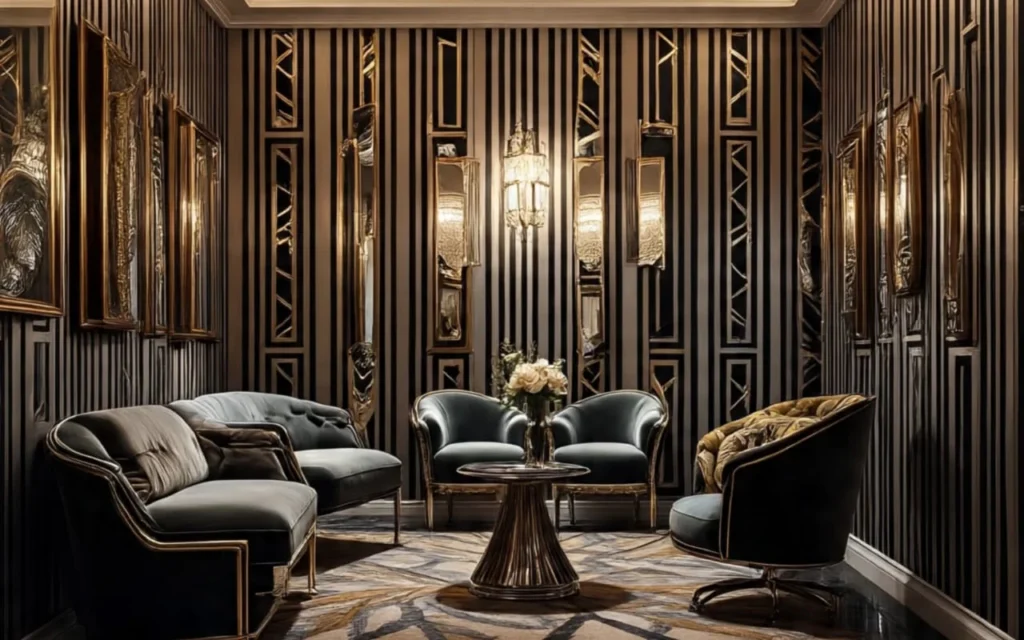
In order to include this in the contemporary interior, pay attention to the use of geometric carpets or patterned wallpapers, or tiles. Symmetry is also important it must be intentional and balanced. Geometric patterns, be they a similar design running along the cushion, or even a reused motif on a console table that is later made into a cushion, instantly create the glamour and smoothness, the images of which characterize Art Deco design.
The Art Deco Color Palette
The Art Deco palette is luxurious, rich, and bold. Dark jewel colors such as emerald green, sapphire blue, ruby red, and royal purple are the colors prevailing, and are usually mixed with metals such as gold, silver, and chrome. The main role is also played by black and white, which provides contrast and drama. These blends produce rooms that are both impressive and beautiful.
To be on the bright side, we would use more darker colors and less soft ones. The same spirit is mimicked in a navy wall that has details of brass or a cream sofa with gold cushions. It is aimed at merging luxury with opulence. The Art Deco color is not timid, but expressive and strong, and it replicates the confidence and glamour of that period.
Luxurious Materials and Finishes
The Art Deco is associated with the rich fabrics and the flawless workmanship. Visualize wood that is polished, lacquer, marble, velvet and mirrors. The combination of these textures is to bring light and to reflect the grandeur. Metal coats particularly gold, chrome and brass incorporate immediate glamour and uplift even simple varieties.
To get this luxury in your house, select several statement materials and get glittering. Mirrored coffee table, velvet armchair, or marble-topped console immediately sends one back to the Art Deco spirit. It is all about quality rather than quantity. All the surfaces must be sophisticated and elegant to make your interior look more like a modern version of the classic extravagance.
Furniture with Elegance and Shape
Art deco furniture aims at making a statement. It has smooth lines, harsh lines and prominent silhouettes. Wooden inlays, metallic trimming (pieces) or glossy finishes are also common in pieces to emphasize craftsmanship. The scalloped backs of the sofas, the round tables and angular side boards all recall the beauty of the 1920s and 1930s.
In selecting furniture always emphasize upon form and proportion. Choose the pieces that are symmetrical and rather dramatic and functional. An elegant armchair in velvet or a sleek bar cabinet can be used to bring the ideal combination of glamour and comfort. Since Art Deco furniture is not meant to be worn and taken apart, it is meant to be enjoyed and appreciated as art and detail.
Lighting: The Sparkle of Art Deco
Lighting is an important ingredient in producing the Art Deco look. Sconces, chandeliers and table lamps were commonly sculptural art forms. Glass, chrome and crystal were usually utilized to reflect and glitter. The geometric or tiered design replicates the style of the era and focuses on the form more than the functionality.
The way to replicate this glow is by searching statement lighting pieces that stand out. Ancient glamour is provided immediately by a chandelier with flowing glass panels or a geometric gold lamp. mix stacked lighting to emphasize the textures and metallic finishing all over the room. The appropriate lighting makes any room look like a high-tech Art Deco masterpiece.
Wall Art and Decorative Details
A statement interior cannot be achieved without Art Deco. The style is characterized by bold artwork, mirrors and sculptural accessories that reflect the confidence of the style. The abstract paintings, sunburst mirrors and framed black and white photographs provide some personality without losing the elegance. Ornamental mouldings, glass and metallic trims create the visual rhythm on both decorative and functional walls and furniture.
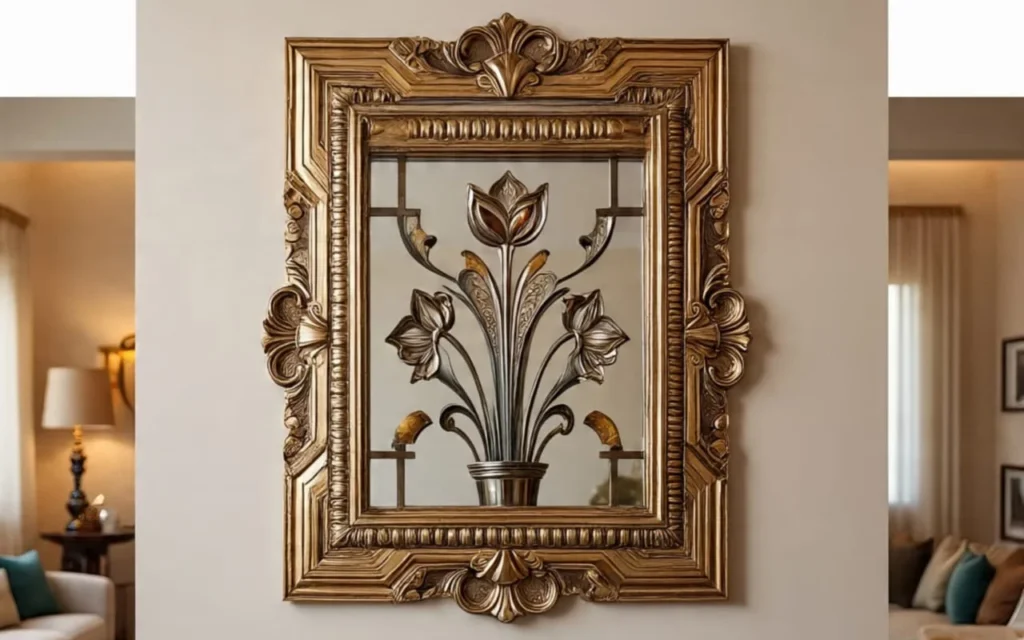
Inclusiveness of decor to go hand in hand with geometry and symmetry. To increase the amount of natural lighting, put mirrors facing windows or use gold accents to richly decorate the place. Art Deco lives on drama, although of an exquisite sort–no work of his must appear accidental. Such details make a room look more than beautiful when selected well.
Combining Modern Design with Art Deco
Art Deco can be easily adjusted to the contemporary interiors, which needs to be thought over. Combine its posh aspects and modern simplicity to create a balanced appearance. To take an example, a brass lamp or a geometric rug may be placed in a bland room, and it will provide the room with the necessary depth and elegance without making it look over-the-top.
It is better to have statement accents instead of crammed into every corner. Smooth modern furniture can cohabit with Art Deco details like metallic trims or mirrored finishes to allow eternal glamour. The trick is to balance it: allow the confident Art Deco details to be on the forefront and retain some modern-day restraint and proportion.
FAQs
Final Thoughts
Art Deco interior design is one of the most fashionable and iconic style that has lived throughout history. The combination of its bold geometry, rich materials and elaborated elegance makes the interiors never become out of fashion. It is with statement lighting, lavish fabrics, or classy furniture, that Art Deco adds a touch of artistry and revelation to any room.
In the modern houses, it is a reviving pride compared to minimalism. With the essence of the 1920s and a simple mix with some touches of modernity, you can obtain the appearance that is traditional and modern together. Art Deco teaches us how real grace is by being bold, in balance and daring to shine.