Gothic Furniture Design: Timeless Elegance in Dark Luxury
Gothic furniture design is more than a style it’s an emotion. It tells stories of history, romance, and craftsmanship. With its dark tones, intricate carvings, and dramatic silhouettes, Gothic furniture adds mystery and depth to any space.
Let’s explore what makes this furniture style so captivating, how to blend it with modern interiors, and why it continues to inspire designers around the world.
What Is Gothic Furniture Design?
Gothic furniture traces its origins back to the 12th and 16th centuries in Europe, particularly in France and England. It was heavily influenced by Gothic architecture think of cathedrals with pointed arches, tall spires, and ornate details.
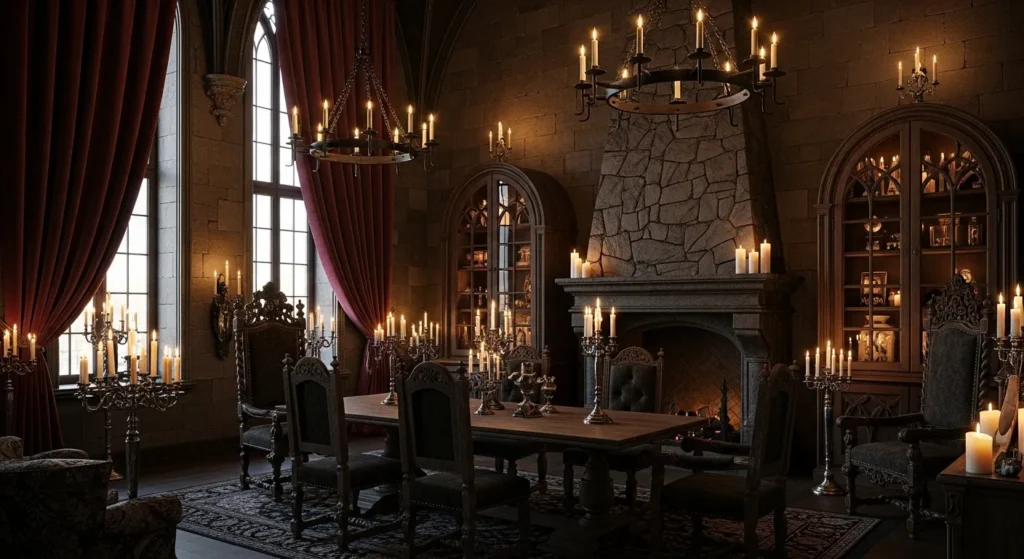
This influence translated beautifully into furniture. Chairs, tables, and cabinets featured arched motifs, intricate carvings, and bold geometric patterns. Everything was made to look grand, symbolic, and deeply artistic.
Modern interpretations, however, bring this aesthetic into a new light. The contemporary gothic furniture style keeps the essence of drama and craftsmanship but softens it with modern simplicity and function. Learn more about Gothic Interior design.
Key Features of Gothic Furniture
To recognize Gothic design, look for these timeless elements:
- Dark Woods: Mahogany, oak, walnut, and ebony dominate the palette.
- Ornate Carvings: Floral vines, arches, crosses, and heraldic symbols etched into surfaces.
- Heavy, Solid Builds: Furniture feels substantial, built to last centuries.
- Pointed Arches & Tracery: Echoes of Gothic cathedrals appear in chair backs and cabinet doors.
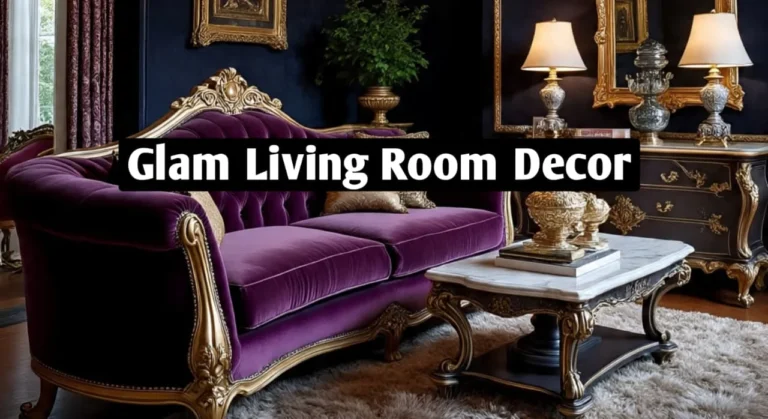
- Rich Fabrics: Velvet, brocade, and damask enhance the royal atmosphere.
- Metal Accents: Iron handles, brass hinges, and gold ornamentation add shine and contrast.
Every piece feels like art — something designed not just for comfort, but for storytelling.
The Symbolism Behind Gothic Design
Gothic design has always been symbolic. Its patterns and carvings weren’t just decoration — they carried meaning.

- Arches and Spires represented reaching toward the divine.
- Floral and Nature motifs symbolized life, renewal, and spirituality.
- Crosses and Heraldry reflected nobility and faith.
Even today, these symbols give modern interiors a sense of depth and emotional weight — something you rarely find in minimal design.
Types of Gothic Furniture
There isn’t one single type of Gothic furniture. Over the centuries, this style evolved into several fascinating variations:
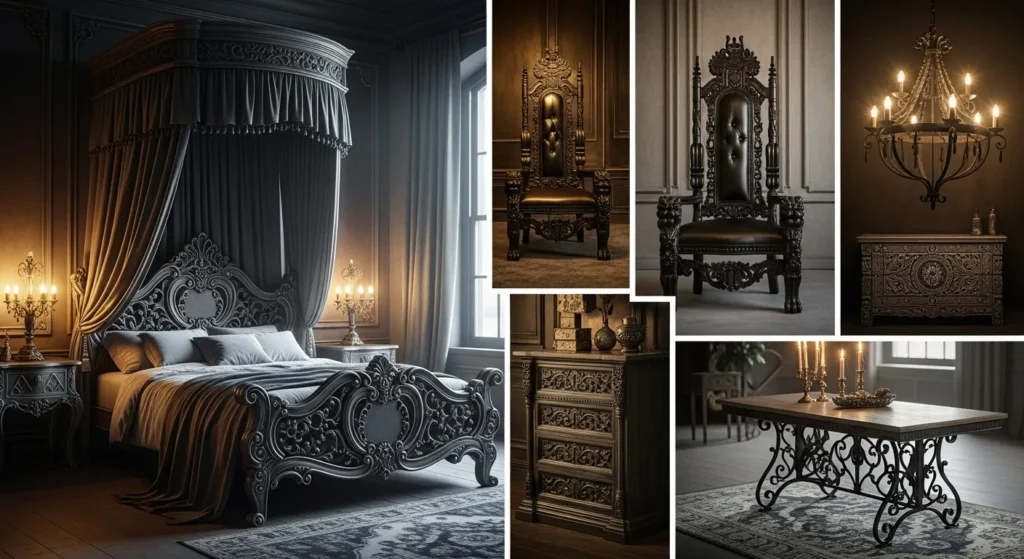
1. Traditional Gothic
The most authentic version — dark, heavy, and detailed. Expect carved oak chairs, large tables, and cathedral-style cabinets.
2. Gothic Revival
Popular in the 19th century during the Victorian era. Slightly lighter but still ornate. Perfect for homes that want historical flair.
3. Modern Gothic
A blend of drama and simplicity. Clean lines, dark finishes, and selective use of gothic motifs. Works beautifully with minimalist or contemporary interiors.
4. Whimsigoth
A fun, modern interpretation of gothic mixed with whimsical details — bright pops of color, curvy silhouettes, and playful gothic charm.
Each variation carries its own personality, yet all share the same emotional richness.
Materials and Craftsmanship
Gothic furniture is all about craftsmanship — it celebrates the hands that build it.
- Wood: The backbone of the style. Dark hardwoods with a polished or distressed finish.
- Metal: Wrought iron, brass, and bronze details on corners, legs, and handles.
- Upholstery: Deep-toned fabrics like black velvet, burgundy suede, or patterned brocade.
- Stone and Marble: Occasionally used for table tops or decorative bases.
The combination of these materials creates a perfect balance — hard yet soft, dark yet inviting.
Color Palette in Gothic Furniture Design
Color defines the emotion of a space. In Gothic furniture design, the palette is luxurious and deep:
- Primary Tones: Black, dark brown, and mahogany.
- Accent Colors: Burgundy, emerald, navy, plum, and gold.
- Metallic Highlights: Brass, bronze, and antique gold for contrast.
These colors evoke feelings of warmth, depth, and timeless luxury — especially when paired with candlelight or soft warm lighting.
How to Style Gothic Furniture in Modern Homes
The challenge with gothic furniture is to keep it dramatic without feeling outdated. Here’s how you can do it:
- Use It as a Focal Point: One gothic piece can transform an entire room. Try a carved wooden headboard or ornate cabinet.
- Mix Old and New: Pair a gothic armchair with a modern glass table. Contrast adds character.
- Choose Mood Lighting: Candles, chandeliers, or wall sconces work best with this style.
- Balance with Neutrals: Surround dark furniture with lighter walls or flooring to prevent heaviness.
- Add Texture: Velvet pillows, lace drapes, or patterned rugs create cozy contrast.
The goal is balance let the furniture shine without overpowering the space.
Popular Gothic Furniture Pieces
If you’re planning to decorate with gothic style, start with these statement items:
- Gothic Bed Frames: Tall, arched headboards with intricate carvings.
- Accent Chairs: High backs, claw feet, and dark upholstery.
- Cabinets and Armoires: Heavy wood with cathedral-style doors.
- Dining Tables: Long and narrow with detailed legs and edges.
- Coffee Tables: Mix marble tops with iron legs for a modern gothic vibe.
- Bookshelves: Towering designs with arched frames — perfect for a gothic reading nook.
Even one well-chosen piece can bring old-world luxury into your home.
Where to Find Gothic Furniture
You don’t need to live in a castle to own gothic pieces. Today, you can find modern interpretations easily online:
- Antique Stores: Great for authentic, handcrafted furniture.
- Etsy & eBay: Ideal for custom gothic furniture and replicas.
- Home Decor Boutiques: Many offer gothic-inspired modern collections.
- DIY: Thrift dark-stained furniture and add ornate details with gold paint or carved overlays.
It’s all about creativity even simple transformations can give an ordinary piece gothic appeal.
DIY Gothic Furniture Ideas
If you enjoy personal projects, try these easy DIY gothic touches:
- Paint an old dresser matte black and replace knobs with brass ones.
- Add stenciled gothic patterns on wooden furniture.
- Reupholster a chair in deep velvet.
- Use metallic wax to highlight carved details.
These small updates bring the gothic aesthetic to life without breaking the bank.
Expert Styling Tips
- Layer textures to add richness and comfort.
- Add art — dark portraits or stained glass panels enhance the mood.
- Use symmetry in furniture placement to mimic classic gothic balance.
- Avoid clutter — every piece should have purpose and personality.
- Play with contrast — mix glossy finishes with matte textures.
A gothic home feels dramatic yet balanced — mysterious yet elegant.
Final Thoughts
Gothic furniture design is a celebration of history, art, and emotion. It’s bold, poetic, and endlessly fascinating.
Whether you choose a full gothic interior or just a few accent pieces, the style transforms your space into something meaningful a reflection of strength, depth, and individuality.
In a world that often feels minimal and sterile, gothic furniture brings back warmth, story, and soul. And that’s what true design is all about.