Japandi Style Interior Décor
Japandi Style Interior is a gorgeous blend of Japanese minimalism and Scandinavian simplicity, creating a refined approach to modern home decor. It incorporates clean lines, natural materials, and soothing colors to make spaces both serene and functional. This design philosophy celebrates balance, proving that less is truly more. The result is an ambiance that feels calming, refreshing, and deeply harmonious within contemporary homes.
Japandi decor is all about being simple and designed. There is a reason behind every item and there is not a lot of clutter. This style is a combination of the Scandinavian appreciation of coziness, called hygge, and the Japanese concept of wabi-sabi, which values imperfection. They combine to create a classical pattern of design that enhances well being, nature and simple elegance.
The Philosophy Behind Japandi Décor
Japandi is not a simple fad in decoration, but a kind of philosophy of life, based on peaceful coexistence. It makes individuals take their time, make things simpler around them and value craftsmanship. Both Scandinavian cultures and Japanese culture cherish practical beauty, in which details count. It is concentrated on natural light, outdoor spaces, and objects that add some value to everyday life.
This design style denies anything extravagant and unnatural glamour. Rather, it glorifies authenticity – consider raw wood, natural fabrics and handmade. Japandi style is the process of making houses that allow serenity to thrive not the senses. It is a blend of the two cultural aesthetics that give the interior style a warm but not cluttered, natural and at the same time modern and deeply relaxing.
Natural Materials and Organic Textures
Japandi interiors are based on the application of natural materials. The palette is dominated by wood, bamboo, linen, stone and cotton, which provide a tactile comfort and visual coziness. These details relate the house to the natural world, which increases the calmness and equilibrium. The fine wood or the feel of a hand weaved piece is incorporated with the beauty of the decor.
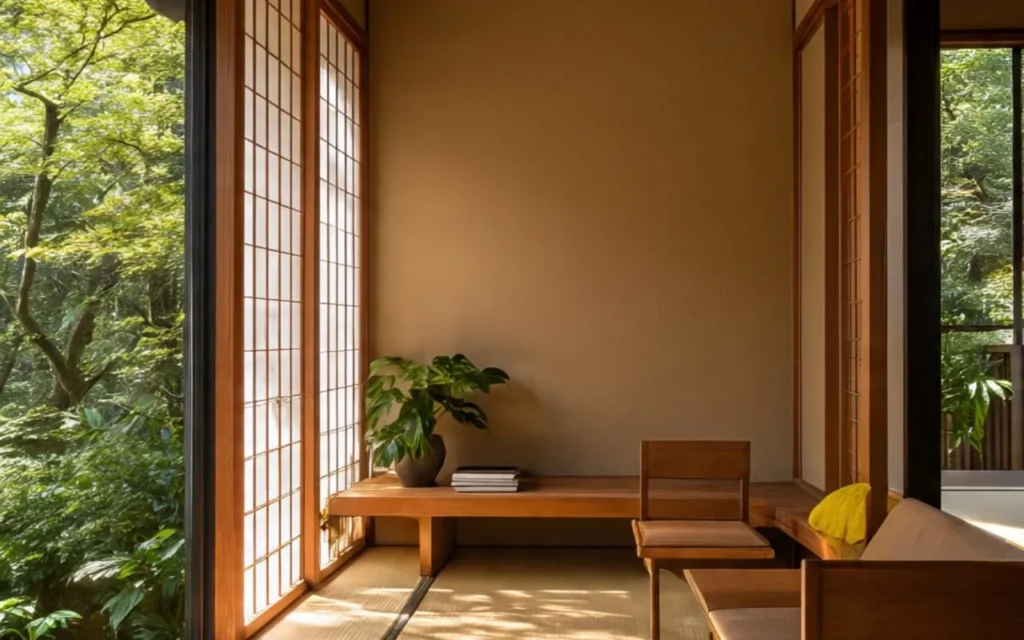
Other textures are overlaid to give depth and yet be in harmony. Something as basic as a bamboo coffee table, linen sofa or a jute rug can turn even a basic room into a relaxing haven. Shiny or synthetic finishes should be avoided and matte surfaces and organic flaws should be adopted. Japandi spaces are tactile and robust, authentic and easy to classify as elegant.
Color Palette and Mood
Japandi interiors are natural and of soft and earthy colors. The base comprises neutral tones such as beige, taupe, gray and off-white and is complemented by the muted green, blue and terracotta. The harmonious colors are calming and bring a sense of tranquility and calmness, which would make it the best environment to rest and meditate.
This dull colour scheme makes sure that there is a visual continuity and unity in the space. The lack of vivid contrasts promotes the minimalistic feel. It is important not to be too uniform, add a little tone change, like warm wood with cool gray, or creamy white with charcoal additions. This has produced a non-hardly assembled design that is modern, natural and timeless simultaneously.
Minimalist Furniture and Functional Design
The Japandi style of furniture is an adherence to simplicity that has a purpose. The space is dominated by clean lines, low profiles and practical designs. Each work is selected not only on the basis of beauty, but also on the basis of functionality; a theme reflected in the Japanese idea of Ma which considers empty space as an important aspect as filled space. Such a balance brings a serene movement and eliminates the visual clutter.
Use handmade furniture that is used out of green wood. The Scandinavian-inspired chairs, low Japanese style table and modular storage units are all fitting well within this aesthetic. It is not intended to clutter the room but to provide breathing space to every item. Japandi furniture is characterized by simplicity, comfort, and craftsmanship, and each piece of it must add to harmony and functionality.
Lighting That Creates Calm
Lighting is also an important element in the attainment of Japandi serenity. There is preference to natural light and the room is lined with huge windows with little coverings to enable daylight to penetrate inside the room. In the case of artificial light, it is soft, warm, and subtle never rough or obtrusive. Pendant lights which have paper or linen shades are especially useful in the diffusion of soft lights.
Light sources also need to be positioned just like design. The use of layering of lighting: ambient, task and accent lighting does not disrupt the calmness. Use fixtures with wood details, mat surfaces or plain geometrical figures. The whole impression is supposed to be relaxing and natural, increasing the textures and colors which characterize Japandi interiors.
Nature as an Integral Element
Japandi design is centred around nature. The minimal space is enlivened by the indoor plants, stones and natural fibers. Nevertheless, Japandi does not prefer the close plants, but prefers few well-spread plants to provide a balance. A refreshing contrast to neutral backgrounds is offered by bonsai trees, bamboo stems or leafy potted plants.
There is natural light, open air, organic textures, which form a living environment to be peaceful and connected to the earth. Nature addition does not solely enhance aesthetics but aids the psychic conditions and relaxation. It is the balance between the interior and the exterior which is what captures the essence of Japandi decor.
Decluttering and Simplicity
Japandi home is a home of space and simplicity. Clutters are the foes of calm and therefore all objects should be meaningful and purposeful. Storage systems are smooth and discreet and the eye looks at uncovered, clean surfaces. The lack of clutter produces an impression of lightness and clarity of mind.
The first step towards this would be to reduce unnecessary objects. Retain nothing but that which is useful to everyday companionship, or which is a true source of pleasure. It is easy to keep the place in order due to simple shelving, built-in furniture, and multi-purpose furniture. The outcome is an atmosphere of airiness, deliberateness, and calmness in the living room, in which beauty is not lavish but restrained.
Soft Textiles and Cozy Details
Although Japandi design is characterized by minimalism, it does not exclude comfort. Fabrics such as cushions, wool throws, and linen blankets are soft, and therefore they provide warmness to the clean-lined interiors. Japanese simplicity and Scandinavian coziness meet each other in the form of texture and no decoration. These fabrics bring comfort and do not ruin the aesthetics of relaxed precision.
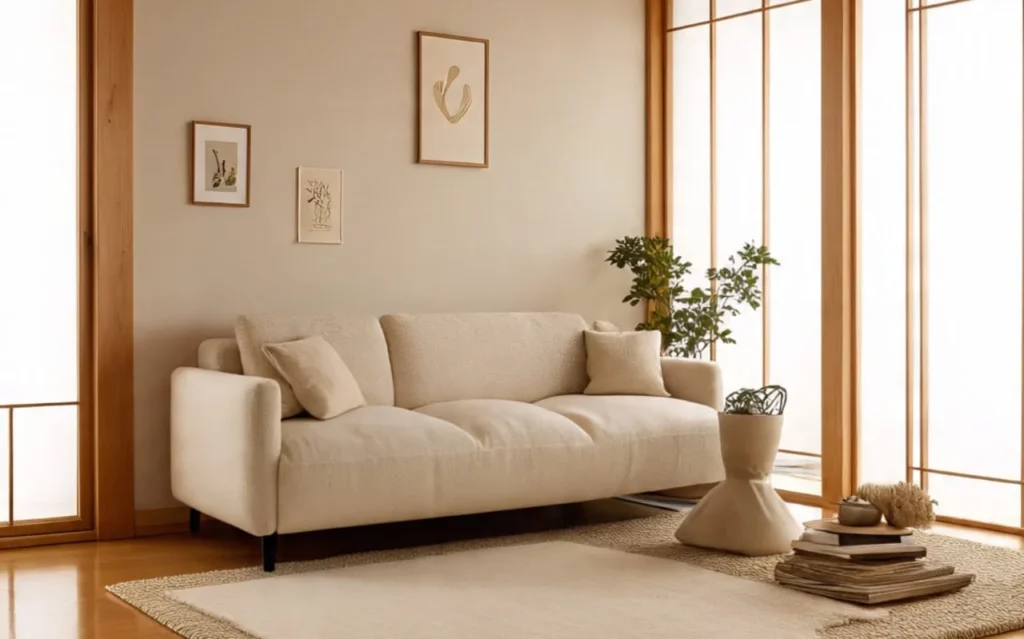
Use neutral coloured natural fabrics. The presence of a wool carpet on the floor, a sofa cushion made of soft cotton or a bedspread made of linen can turn cold minimalism to warm elegance. The trick here is that the textures are added in an indirect way, without making the image inflated. These homey injections make the room look lived in and welcoming and still retain that Japandi calm.
FAQs
Final Thoughts
The art of Japandi style decor is an encounter of two worlds: Eastern mindfulness and Northern simplicity. It is not so much an appearance but a lifestyle where there is respect to peace, functionality, and natural beauty. The mix of home and tidy, rough and elegant allows to get an atmosphere that rejuvenates and provides time to unwind and think.
With Japandi, you will bring nature, clarity and warmth to your house. It is a fashion that speaks not loudly but quietly, and it is true that simplicity is the most fashionable luxury. Japandi is a place of escape, the world is hectic, but when it comes to keeping pace with the world, Japandi is the best place to reconnect with the past, with what is most important in life.