Transitional Style Home Decor
The fusion of comfort and the cleanness of the modern design, the transitional style home decor perfectly combines the charm of the traditional interior and the modern design. It produces a permanent and symmetrical appearance that is neither decisive nor minimalistic. The style is flexible as it incorporates the old and new, and gives the homeowners the liberty to experiment but remain in harmony and elegance in the entire structure.
This design philosophy is concerned with simplicity and sophistication. It does not stoop to excessive decoration, and does not lose the warmth and the personality. Spaces appear friendly but elegant with the help of neutral colors, natural materials, and gentle textures. Transitional decor is an art of making the past and the present coexist and being able to live in harmony, so that your home is neither old fashioned nor new.
Neutral Color Palette as the Foundation
Colors also help in establishing the tone of the transitional interiors. The base of this design is made up of neutral colors like beige, ivory, taupe, gray and soft brown. These harmonizing sounds play a unifying role in the background that does not overwhelm the space, but lets the furniture and accessories shine in a subtle way.
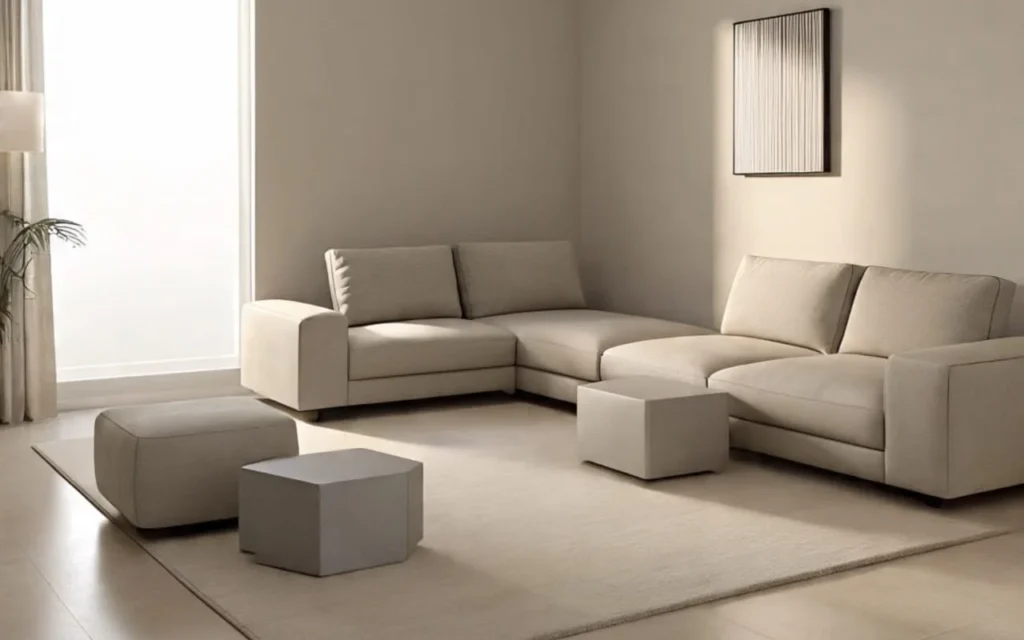
The use of muted colors is a way of bringing harmony and calm. The neutrals can be enhanced with metallics, navy or muted blues to provide some depth and contrast. The palette of the entire palette must be rather discreet with a focus on textures and forms. This method makes transitional spaces eternal and fresh.
Furniture That Balances Old and New
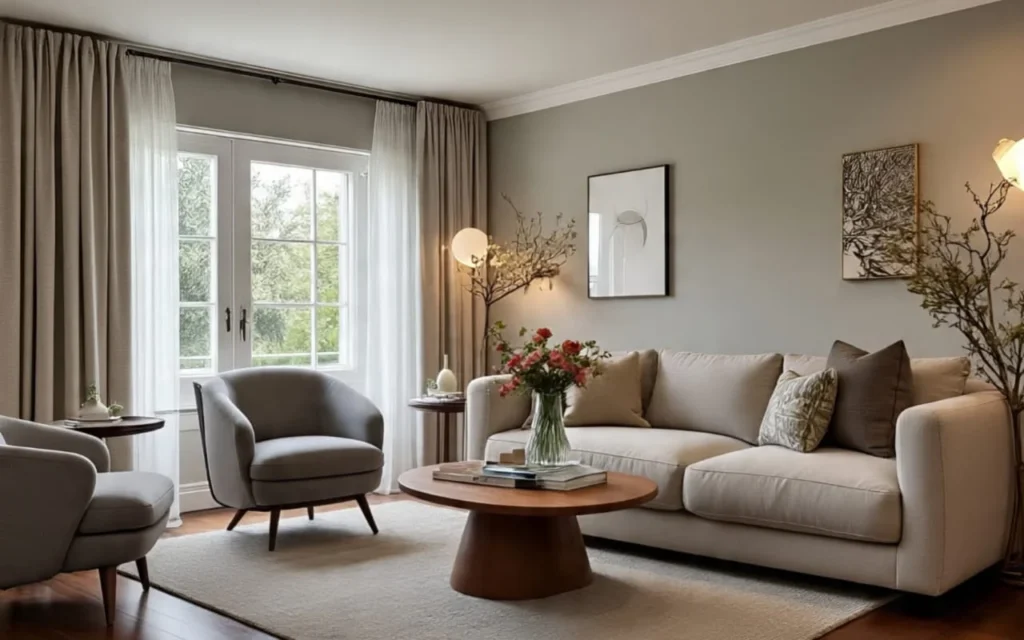
The transitional style furniture is the best furniture that provides the ideal balance between the modern smoothness and the classic coziness. The works are either traditional in silhouettes with unknown finishes or the opposite. Imagine roundish-shaped sofas and clean-cut coffee tables or old-fashioned seats accompanied by austerity lighting.
This combination of factors results in making the house appear elegant but comfortable. Transitional furniture does not have excessively fancy designs, over-the-top or so modern. It is concentrated on quality workmanship and comfort. These harmonious jumbles of times give you the feeling of stability and sophistication that does not result in either of the extremes.
Textures and Fabrics for Warmth
The transitional design is very critical in incorporating depth and coziness, which is facilitated by textures. Furniture is often softened with plush fabrics like velvet, linen, cotton, and chenille that cover the structural lines of the furniture. These substances give the surfaces a texture and the whole appearance relaxed and welcoming.
The variety of textures by being layered makes it interesting to the eye. In case of illustration, match a smooth leather couch with a woolen blanket or silk pillows. The decor is helped down to earth with natural rugs, baskets woven, and drapery. The objective is to have a friendly atmosphere in which textures help one feel relaxed without the visual overload, having every corner look occupied and yet fashionable.
Lighting That Complements the Mood
Transitional homes use lighting that is utilitarian and decorative. It is the transition between the old chandeliers and the modern lights and provides graceful and yet subtle lighting. Soft metallic-finished pendant lights, recessed lighting, and table lamps are also part of the mission and do not grab attention.
Combination of ambient, task and accent lights in the form of layered lighting is used to provide a welcoming, warm atmosphere throughout the home. This style is well done with glass, brushed nickel finishes and brass. The light balance helps to emphasise the architecture of a building and to focus on the textures so that there will be an ideal combination of comfortability and aesthetics.
Accessories and Art with Purpose
The transitional home interior is very selective in picking accessories that will create points of interest but not clutter. Each work must possess a purpose or estheticism. Mirrors of the statement, abstract art, ceramic vases, and metallic sculptures merge with the neutral background with ease.
In choosing the art, find the works that incorporate both antique and current influences. Minimalist prints can be used separately with a framed old map. Minimize clutter with clear and well-placed decoration around the house, less decoration brings harmony and the modest elegance of the transitional style, which ensures that each room will have a visual balance.
Flooring and Finishing Touches
flooring assists in uniting the transitional appearance. The most popular flooring is hardwood floors of warm or neutral stains. They bring in the natural touch but are timeless. Soft-patterned or low-key area rugs are used to mark areas and incorporate floor comfort.
Crown moldings and baseboards may be applied without being too extravagant to finish off. Trims and simple finishes are used to augment the architectural appeal with the help of matte surfaces. The blend of old and new restraint makes the interiors look refined and comfortable enough to touch without overwhelming your senses, and in this way, the transitional motif flows through your house.
Creating Flow Between Rooms
The seamless movement of rooms in rooms is a characteristic of transitional style house decoration. The spaces are supposed to have a feeling of connection with color, materials and design decisions. Using similar tones or textures in several parts makes sure that one is in harmony but they leave little changes so that it does not become monotonous.
Open layout designs are suitable in this type of style because they emphasize uniformity in design features. The furniture must be arranged in such a way that it promotes movement and communication without being crowded together. A balanced treatment of proportion and decor can make you attain the flowing atmosphere where all rooms are complementary to each other – impeccably compatible and eternal.
Sustainability in Transitional Design
However, today, transitional homes tend to go green and use sustainable resources and materials. Recycling of wood, low-energy consumption of lights, and paints that are non-toxic go well with this harmonious approach. These factors add genuineness and make the environment healthier.
Green practices do not hurt beauty, on the contrary they make it even more beautiful. Old pieces of furniture that have been reupholstered with environmentally friendly fabrics or locally made decor serve to give the furniture a personality and a sense of responsibility. Such a design-considerate solution results in a space that is not only beautiful to appear in but also helps to take care of the environment and live consciously.
Faq
Final Thoughts
Transitional style home decor is not only a blend of years, but also a concept of harmony, coziness, and eternal beauty. It gives you an opportunity to blend some favorite traditional details with the smooth modern attributes so that your house will become cozy and elegant. The unbiased colors, quality materials and considered layering make the place quite welcoming in everyday life.
Adopting this style means that you have added calmness and beauty to your space. Transitional decor is the one that tests the time since it can easily fit in the changing preferences. Be it a remodelling of a single room or the entire house, this is a very adaptable style that would see a flawless join of traditional appeal and modern elegance.